


Importing Swine and Germplasm into the United States
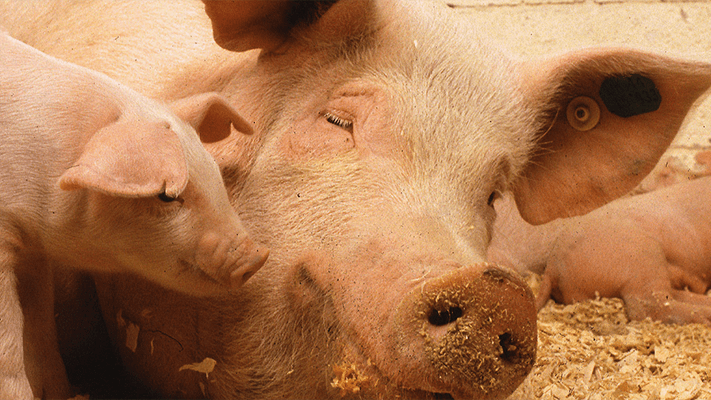
There are many processes involved with importing different species of regulated live animals into the United States. This page explains the requirements for importing live swine and swine semen.
Requirements
Canadian Border Ports
The following land border ports are designated as having the necessary inspection facilities for the entry of swine from Canada:
- Eastport, Idaho
- Houlton, Maine
- Detroit and Port Huron, Michigan
- Raymond and Sweetgrass, Montana
- Alexandria Bay and Buffalo, New York
- Dunseith, Pembina, and Portal, North Dakota
- Highgate Springs, Vermont
- Sumas, Washington
Air Port
The following port has APHIS inspection and quarantine facilities necessary for quarantine stations and all swine shall be entered into the United States through:
- Newburgh, New York
These species may only be imported from the following listed countries.
Canada
- Protocol for the Importation of Domestic Swine From Canada (147.04 KB) | June 2026
- Health Certificate: Live Swine Import From Canada (3.91 MB)
- Protocol for the Importation of Farm-Raised "Wild" Boar From Canada (237.98 KB) | May 2020
- Health Certificate: Farmed Wild Boar Import from Canada (759.13 KB)
- Protocol for the Transit of Swine, Sheep, and Goats From Canada to Mexico by Land Through the United States (184.31 KB) | February 2023
European Union: A permit and export health certificate are required.
Due to the recent detections of foot-and-mouth disease (FMD) in Hungary, Slovakia, Cyprus, and Greece import of live swine from these countries is currently prohibited.
- Protocol: Breeding Swine Import From European Union Member States Recognized as Low-Risk for Classical Swine Fever (257.51 KB) | April 2026
- Model Health Certificate: Live Swine Import From European Union Member States Recognized as Low-Risk for Classical Swine Fever (184.4 KB) | April 2026
- Norway: Health Certificate: for the Import of Live Breeding Swine from Norway to the United States (349.8 KB) | July 2026
- Spain: Health Certificate: Export Breeding Swine to the United States from Spain (443.08 KB) | July 2026
United Kingdom: The same conditions as designated in the Protocol for Breeding Swine Import from European Union Member States are used for this type of import. A permit and export health certificate are required.
- Great Britain (England, Scotland, Wales): Health certificate 1196EHC_V5_GB.pdf (publishing.service.gov.uk)
- Northern Ireland: Health Certificate 1196EHC_V5_NI.pdf (publishing.service.gov.uk)
Canada
- No permit is required if the semen tanks are transported by land; an export health certificate is required to import swine semen from Canada.
- Health Certificate: Swine Semen Import from Canada for Reproduction (1.9 MB)
European Union: A permit and export health certificate are required.
Due to the recent detections of Foot-and-Mouth (FMD) disease in Hungary, Slovakia, Cyprus, and Greece import of swine semen from these countries is currently prohibited.
- Model Health Certificate Swine Semen Import from Member States of the EU (293.63 KB)
- Model Health Certificate Swine Semen Import from the Netherlands
Norway: A permit and export health certificate are required.
- Health Certificate Swine Semen Import from Norway (923.89 KB)
United Kingdom: A permit and export health certificate are required.
What You Need To Know
- U.S. transits are classified as shipments presented to a U.S. port of entry for conveyance purposes to then be transported to a destination country shortly after.
- Please note that any animals and their germplasm transiting the United States must not transit countries with questionable disease statuses prior to reaching a U.S. port of entry.
- All transits require a contingency plan. Submit your contingency plan with your permit application (VS 17-129 (211.74 KB)) to laipermits@usda.gov. To submit an import permit electronically, visit APHIS eFile.
- If you are applying to import live animals, semen, and embryos, you may submit applications by email to laipermits@usda.gov.
Contact Us
Live Animal Imports
For questions about import permits or permit applications:
Live Animal Import Permit Team
Email: laipermits@usda.gov
Phone: 301-851-3300
For general questions related to the import of a live animal:
Live Animal Import and Export
Email: laie@usda.gov
Phone: 301-851-3300